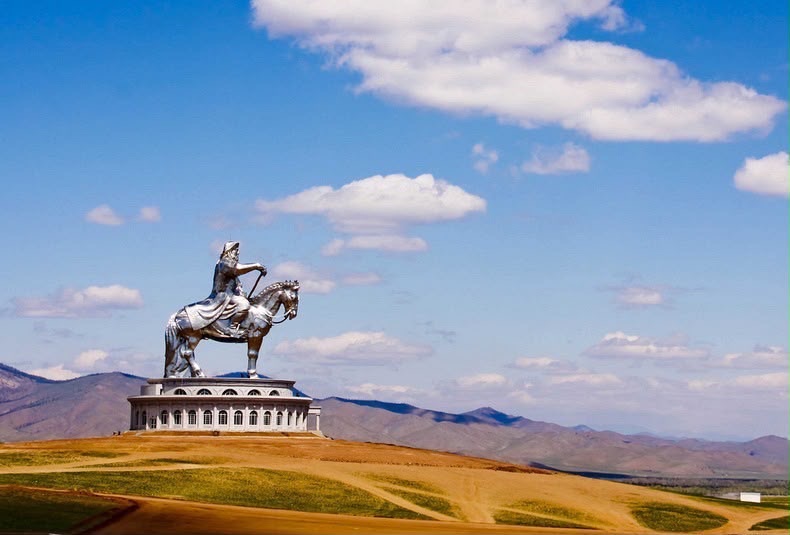

Mongolia is the most sparsely populated country on Earth. Despite being five times the size of Germany, its entire population is smaller than the city of Birmingham. I travelled to Mongolia in 2025, and it blew me away in ways I never thought possible. I’d been travelling for months. I’ve done beaches in Vietnam, trekked in Nepal, explored temples in Thailand, yet nothing felt like Mongolia.
Mongolia is a country of incredible natural beauty, with a level of untouched culture that the modern travel world is rapidly running out of. So, take it from me, you really ought to see it before the world catches up.
Why Mongolia, Why Now?
In 2024 the Lonely Planet guidebook put Mongolia at the top of their Best in Travel report. The Mongolian government has been running an energetic tourism campaign, and as of mid-2026, this east-Asian republic has already welcomed 476,000 foreign tourists into the country. According to the country’s national statistics office, this was a 25.7% rise in the arrival of foreign nationals in the first half of the year compared to the same period in the previous year.
Despite this considerable increase, 400.000 visitors is still nothing. Uzbekistan, a country which is viewed as equally untouched, saw over 6.5 million tourists in the same period. This tells you something important, the crowds really haven’t arrived yet. Thus, travellers who are going are still, largely, people who actively sought it out.
Why You Must Go
Mongolia is one of the last places where nomadic culture is genuinely alive. The travel operator ‘Black Tomato’ labelled their Mongolia itinerary as “getting lost in Mongolia, the world’s last truly nomadic realm.” Around a third of the population still live a nomadic or semi-nomadic lifestyle. Choosing to stay with a homestay when you visit means you are a witness to how people actually live, not a visitor in a museum. Rather than consuming their culture from the outside, it is a rare privilege to experience their lifestyle first hand by staying in their homes with them.
The Mongolian landscape is unlike anything in Western travel. The Steppe, which Chinggis Kahn’s army used to march across, runs until it becomes mountains, which run until they themselves becomes desert. Lake Khovsgol in the North is a vision of unspoilt beauty that seems almost too perfect to be real. The Gobi Desert in the South offers camel trekking and sand dune surfing. Due to there being little to no light pollution for hundreds of kilometres, every night the sky shines bright with stars.

Although I have concentrated on the beauty of the Steppe, the country’s capital, Ulaanbaatar, is more interesting than you’d expect. Most people treat Ulaanbaatar as a stopover, which is a mistake. UB (as everyone calls it) is a city of extreme contrasts. Soviet-era architecture sits alongside Buddhist monasteries. In 1924, the country became the world’s second socialist state, which triggered the construction of over 1.000 Soviet-era buildings.

Nestled between an abundance of apartment blocks, and sitting at the heart of Ulaanbaatar, lies the Gandantegchinlen Monastery – one of the most important Buddhist sites in Asia. On top of this, the Chinggis Khan museum is a must see. It stands as the absolute premier repository for Mongol Empire heritage, displaying the timeline of Chinggis Kahn’s life.
The hospitality is exceptional, as Mongolian culture places enormous value on welcoming strangers. For thousands of years, herders migrated across vast, isolated grasslands with few permanent settlements. Because of the threat to life brought by regular severe weather, helping travellers was an unwritten law in Mongolia. By staying in a yurt, you will be fed before being asked any questions.
An Honest Reality Check
Mongolia is cold, not pack-a-jacket cold, but extremely cold. Ulaanbaatar is statistically the coldest capital city on the planet. Even in the summer, temperatures at night are known to drop to as low as nine degrees. If you go in the winter, you are looking at minus twenty degrees or lower. Some people (me included) go specifically for that, for the frozen landscapes and the legendary Eagle Festival in the West. But go knowing what you are in for.
The country is enormous, more than five times the size of the UK. Although the roads I travelled on (for the most part) were well paved and safe, some are not. Travelling between regions may mean long rides on sub-par roads and tracks. But isn’t this part of the appeal? It is what keeps things unspoilt, but it demands patience and good planning.
Facilities in rural places can also be very basic. Yurt stays typically mean no running water and a shared outside toilet. If this sounds unappealing, there are higher-end tourist camps which offer more comfort in the same landscapes.
To go when the Steppe is green and the horses are out, you must visit during peak season – which runs from June to August. In July the Naadam Festival takes place, a celebration of traditional Mongolian sports including horse riding and wrestling. If you travel outside this window though, you will have Mongolia even more to yourself.
How to Get There
Flights from the UK are served by MIAT Mongolian Airlines, Korean Air and Turkish Airlines, flying from hubs such as Frankfurt and Beijing. Flights are not cheap, but the costs when you’re in Mongolia are low. UK citizens have been able to enter Mongolia visa-free for stays up to 30 days under a tourism initiative introduced in 2023. At the time of writing, visa free access for UK passport holders is in place but verify this before you travel.
Where to Go Next
After reading this, I hope I have inspired you to travel deep into Asia and explore the unbelievably rich culture this continent possesses. The travellers I met on the road who had already done the Central Asian countries spoke about Uzbekistan, Kazakhstan and Kyrgyzstan in the same tone as I write about Mongolia. In 2025, Uzbekistan received a record 11.7 million foreign tourists, up 46.8% on 2024. The first half of this year (2026) brought over 6.5 million, nearly 25% more than the same period last year. Kyrgyzstan’s president has claimed 13 million tourist visits; but maybe take that with a pinch of salt.
It was always my dream to go to Mongolia. The country wedged between two of the world’s political and economic superpowers. The country that once dominated over half the Asian continent. I had stared at it on the world map for years, knowing that if I ever made it there, I would find the greatest landscapes and the kindest people.
I was right.
Standing on the Steppe, watching the children ride horses whilst shivering from the blistering cold, it was the most present I have ever felt.
Mongolia will not stay like this forever, the flights are multiplying and the word is getting out. Go before the crowds arrive, go before the yurt camps get Wi-Fi, and go before Mongolia becomes the thing everyone says they wish they’d done sooner.
Go while you can still have it almost entirely to yourself.



Leave a Reply