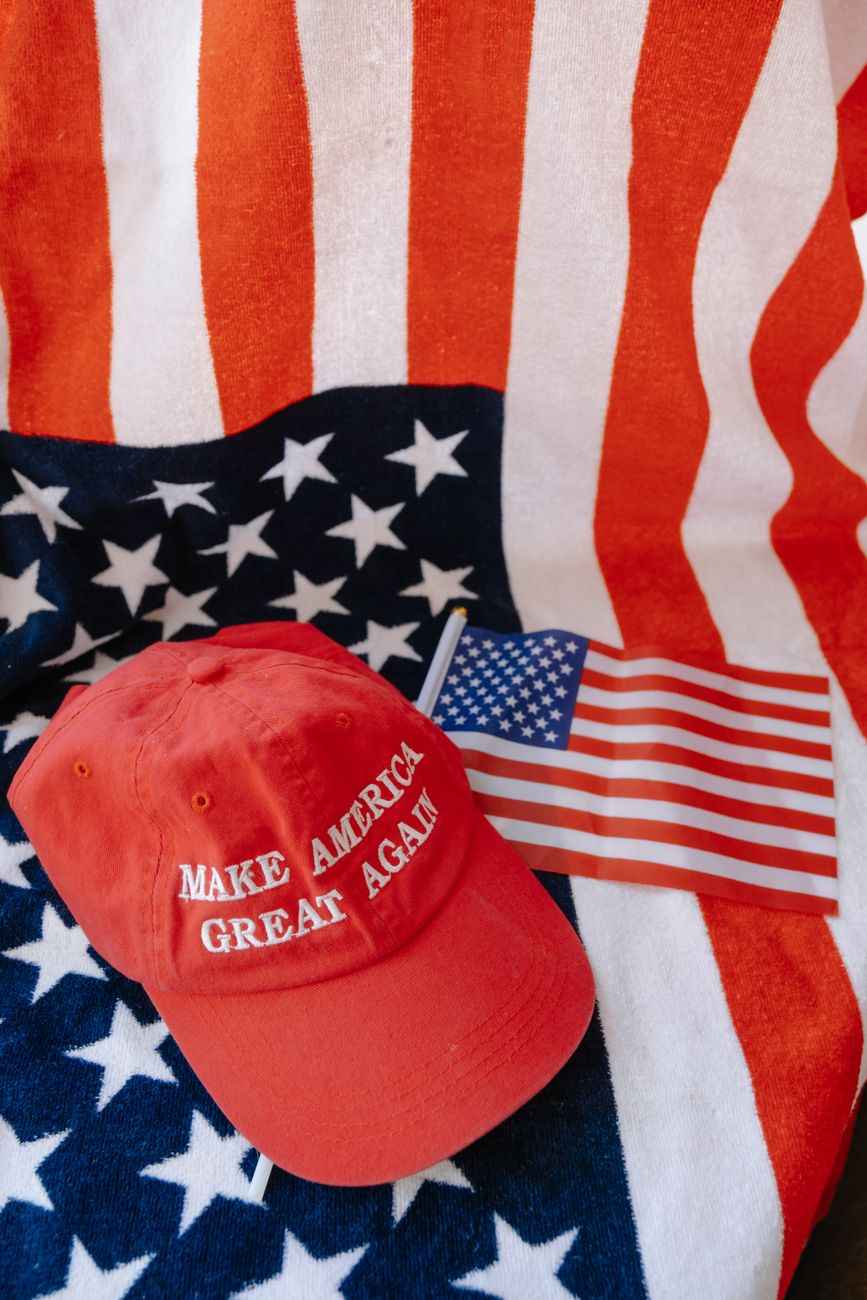

There is something reassuring about a social media platform called Truth Social. Saves you having to check anything. Like a restaurant calling itself “Definitely No Food Poisoning”.
Unfortunately, I have decided to check anyway.
Welcome to True or Trump?, where we take a selection of the president’s posts and investigate whether the evidence shares his enthusiasm. In posts from late September and early October, Trump announced that America had the best employment figures in history, the New York Times was losing subscribers, and Americans could be getting $5,000 each.
Promising stuff. Let’s read the small print.
1. The BEST employment numbers. Which ones?
“The United States has the BEST Employment Numbers in HISTORY,” Trump writes, attributing the claim to Fox News. He adds that the “Fake News Media REFUSES to report” this achievement.
How inconsiderate. Although specifying which employment numbers he’s referring to might help them find the story.
If he means the lowest unemployment rate (the proportion of people in the workforce who are looking for a job but cannot find one), the figures disagree. When he posted on 28 September, the latest rate published by the Bureau of Labor Statistics was 4.1 per cent. In January 2023, it was 3.4 per cent. And if we’re talking about history, the post-war record is lower still: 2.5 per cent, in 1953. You don’t need an economics degree to establish which number is smallest.
There was, however, genuine good news. August’s initial report showed 162,000 jobs added, nearly three times as many as economists expected. But initial figures are routinely revised, and one good month does not establish the best job market in history. Both Reuters and the Washington Post covered those stronger-than-expected figures before his post. A curious way to refuse to report them.
Perhaps Trump means another measure. The total number of jobs, for example, is different from the unemployment rate. Until he identifies the statistic, we cannot properly test his historical claim.
Verdict: Unsupported as phrased. If he means the lowest unemployment rate, false.
2. The failing New York Times
Trump has also been posting about the New York Times, an American newspaper he is evidently not planning to give a five-star review.
Its staff are “going to HELL”, he announces, and “their subscription numbers are way down!”
Hell is difficult to verify. The subscription figures are considerably more accessible.
The company’s latest published results show 13.35 million subscribers at the end of June, compared with 11.88 million a year earlier. That is an increase of approximately 1.47 million. An unusual way to lose subscribers.
There are qualifications. These figures cover the company’s collection of products, including Games and their sports publication The Athletic, so they are not exclusively people paying to read its news. Print subscription revenue fell slightly. And growth is slowing: the Times added fewer digital subscribers than Wall Street expected last quarter, and its shares fell more than 12 per cent on the news.
But slower growth is still growth. “Way down” it is not.
A fair criticism would acknowledge those distinctions. Trump’s post does not.
He also accuses the newspaper of doctoring a photograph of his Florida resort. That is a separate allegation requiring separate evidence, and we haven’t examined it here. Two photographs looking different does not, on its own, establish manipulation.
We are checking his claims, after all. It would be embarrassing to start inventing our own.
Verdict: The subscription claim is contradicted by the latest published figures. The photograph allegation is not assessed here.
3. Vote now. Collect $5,000 later?
“If Republicans win the House of Representatives and the Senate in the 2026 Midterm Elections,” Trump writes, “I’m going to give all Adult Citizens in the United States of America, $5,000.”
An attention-grabbing offer. Most election campaigns give you a leaflet. This one is advertising enough money to make opening the leaflet worthwhile.
The post repeats a pledge he first made in a speech at a Republican convention in Dallas on 9 September, where he branded it the “Trump dividend”.
For anyone sensibly occupied with something other than American politics: on 3 November, Americans vote in the midterm elections. Congress has two chambers, the House and the Senate. Every House seat is up for election, but only about a third of Senate seats are. Republicans currently control both, so Trump is promising the payment if his party keeps them.
But winning an election is not the same as authorising a payment.
AP reports that the proposal would require congressional approval and likely cost more than $1 trillion. Trump has not explained how it would be funded. There are substantial steps between a campaign announcement and money arriving in someone’s account.
That does not mean the promise is automatically false. It means it is a promise. We cannot yet know whether it will be fulfilled, and readers should not mistake it for an approved payment scheme.
Personally, I would wait before spending it.
Verdict: A conditional campaign promise, not a guaranteed cheque.
Three posts, three different problems: an undefined boast, a claim contradicted by published figures and a promise awaiting action.
Truth Social supplies the confidence. We’ll keep checking the numbers.




Leave a Reply